Debt is a problem that can happen to anyone – both due to unexpected financial difficulties and less well-considered decisions.


Debt is a problem that can happen to anyone – both due to unexpected financial difficulties and less well-considered decisions.
Although consumer bankruptcy is one way to get out of debt, it is not always the best choice. There are many ways to regain financial stability without having to declare bankruptcy. Here is a step-by-step guide to dealing with debt and the alternatives you can use to get back on track.
What are the most common causes of debt and how can they be prevented?
Debt does not usually appear suddenly. It often results from specific, recurring causes, such as unexpected household expenses, high education costs, or consumer loans that were supposed to improve your standard of living. In each of these situations, a lack of proper financial planning can lead to serious problems with repaying your debts.
To avoid debt, it is important to be prepared for unforeseen expenses. Regularly building an emergency fund can help you get through difficult times without having to take on new liabilities. It is also worth planning your household budget to include all current expenses, which will allow you to control them better and avoid impulsive decisions. Basic knowledge of personal finance can also be helpful and make it easier to make more informed financial decisions in the future.
How to manage debt effectively to avoid bankruptcy?
If we already have debt, it is important to manage it effectively. The basis will be regular monitoring of repayments and setting a schedule that will help us stick to the agreed deadlines and avoid additional costs associated with delays. It is worth using tools such as automatic transfers or reminders to help you repay your debts on time. Debt management requires discipline, but also the right strategy.
Techniques such as the ‘snowball’ method or the “avalanche” method can be extremely effective. The ‘snowball’ method involves paying off the smallest debts first, which allows you to see results quickly and motivates you to continue. The ‘avalanche’ method, on the other hand, minimises costs by paying off the debts with the highest interest rates first. The choice of the right strategy depends on our capabilities and priorities, but consistent use of either of these methods will help us better control our debt and avoid mounting problems.
Debt repayment plan – how to set a realistic budget?
The basis for getting out of debt is to create a realistic repayment plan that takes into account all our income and expenses. Setting a budget should include a thorough analysis of income and fixed costs, such as rent, utilities and other necessary expenses. Only after taking these into account can we determine how much of our income we can allocate to debt repayment without incurring additional costs and problems.
Once we know our monthly commitments, it is worth analysing where cuts can be made. These are often small changes, such as reducing entertainment expenses or cancelling subscriptions to platforms that we rarely use. Even small savings allocated to debt repayment can give you a greater sense of stability over time. A realistic budget and consistent implementation are essential for getting out of debt without exposing yourself to additional risk.
Debt consolidation as an alternative to bankruptcy
If we have multiple liabilities, debt consolidation can be an effective solution. It allows us to combine all our debts into a single liability, which is repaid in a single instalment, making it easier to control our expenses and avoid delays. Consolidation can also reduce the monthly burden on our budget, allowing for more convenient financial management.
However, the decision to consolidate should be well thought out. Although it simplifies repayments, it can also lead to a longer repayment period, which means higher costs in the long run. Before making a decision, it is worth carefully analysing the benefits and risks associated with consolidation to ensure that the chosen solution is optimal.
Debt relief programmes and their benefits for debtors
For people with more serious financial problems, there are also debt relief programmes that can help them organise their debts without having to declare bankruptcy. These programmes offer the possibility of restructuring debts and establishing a repayment plan that is tailored to the debtor’s individual financial capabilities. Non-governmental organisations and institutions offering debt relief support debtors both in negotiations with creditors and in establishing more favourable repayment terms.
Taking advantage of a debt relief programme allows you to tailor your repayment schedule to your own needs, which significantly reduces the stress associated with debt management. With the right support, you can avoid bankruptcy and at the same time be confident that you can repay your debts within your financial means.
Where to seek professional help in getting out of debt?
When you have a lot of debt and managing it is becoming increasingly difficult, it is worth seeking professional help. Financial experts and advisors specialising in debt relief will help you create a repayment plan, assess your debt relief options and determine the best options. Advisors often also help with negotiations with creditors, which can result in more favourable repayment terms.
In addition to commercial advisory services, there are also non-profit organisations that offer free support to people in debt. This makes it possible to obtain help without incurring additional costs. Professional help not only makes it easier to control your finances, but also reduces the stress associated with a difficult financial situation and gives you the confidence that the steps you are taking are in line with your capabilities and best suited to your situation.
Contact us and find out how to regain financial stability
The process of getting out of debt requires not only consistency, but also appropriate support. At RBB Centre, we offer professional financial advice that takes into account the individual needs of each client. Our experts will help you analyse your financial situation, present the available options and propose the best solutions to help you regain stability. Working with an advisor provides the added benefit of a detailed financial analysis that can reveal previously unseen opportunities for savings or debt restructuring. This allows you to make more informed decisions. Feel free to contact us – together we will find a way to effectively manage your debt so that you can start a new chapter without the burden of debt.
Related entries
Is it possible to declare bankruptcy without the consent of one’s spouse?
The bankruptcy of a natural person – whether a business owner or a consumer – affects more than just the debtor. In many cases, the consequences of declaring bankruptcy extend beyond personal assets and into the sphere of married life.
6 min.
20 May 2025


Panel on insolvency at the largest conference of the International Bar Association (IBA)
From 2 to 27 November, the annual conference of the largest international bar association, IBA 2020 VIRTUALLY TOGETHER, is taking place.
1 min.
07 November 2020



Membership in the International Bar Association (IBA)
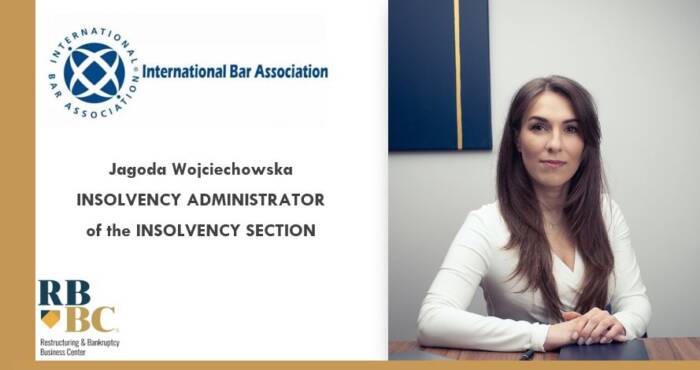
We are pleased to announce that Jagoda Wojciechowska, President of the Management Board, has been appointed Insolvency Administrator of the Insolvency Section of the International Bar Association (IBA), the largest international association of lawyers.
1 min.
20 April 2021

State aid for rescuing insolvent or potentially insolvent companies
This article will discuss one of the short-term types of public aid resulting from the Act of 16 July 2020 on granting public aid for the rescue or restructuring of entrepreneurs (Journal of Laws of 2020, item 1298), [hereinafter referred to as the Act], i.e. rescue aid.
8 min.
22 October 2022



What documents are required when filing for consumer bankruptcy?
Declaring consumer bankruptcy is one of the most common forms of legal debt relief in situations of permanent insolvency of a natural person. This procedure has been designed for debtors who do not run a business and are unable to settle their liabilities on time.
6 min.
10 April 2025


Consumer bankruptcy – what exactly is it? What is worth knowing?
Financial problems can happen to anyone and are often the result of unfortunate random events such as job loss or serious illness. In such situations, feelings of overwhelm become commonplace, and getting out of debt may seem unattainable. One of the solutions offered by the Polish legal system is consumer bankruptcy.
6 min.
11 October 2024



Who can declare consumer bankruptcy?
Consumer bankruptcy is a special court procedure that involves debt relief for individuals who are no longer able to manage their repayments.
2 min.
03 September 2021