
During the Covid-19 epidemic in Europe, the Swiss franc exchange rate rose significantly. For people who took out a loan denominated or indexed in Swiss francs, this means an increase in the outstanding loan principal.


During the Covid-19 epidemic in Europe, the Swiss franc exchange rate rose significantly. For people who took out a loan denominated or indexed in Swiss francs, this means an increase in the outstanding loan principal.
What is more, in many cases, the monthly instalment has increased significantly. Given the current sudden socio-economic changes, currency stability seems out of the question. In view of the above, the question arose as to whether ‘Frankowicze’ (people with Swiss franc loans) have the option of stopping, even temporarily, the repayment of their loan instalments. The answer to this question is yes. There are two options, but in reality only one guarantees the borrower’s security.
Given the current rapid socio-economic changes, currency stability seems impossible. In view of the above, the question arose as to whether ‘Frankowicze’ (people with Swiss franc loans) have the option of suspending, even temporarily, their loan repayments. The answer to this question is yes. There are two options, but in reality only one guarantees the borrower’s security.
The first solution has been made available by banks. Citing the crisis caused by Covid-19, most of them offer the possibility of deferring loan repayments, known as loan holidays. It should be noted that this option only allows for the deferral of loan principal repayments for a limited period of time. However, this solution is risky and controversial, as in order to obtain a deferral, the bank and the borrower must sign an annex to the agreement. Depending on the bank, the provisions of the annex may include, among other things, confirmation of balances, confirmation of the terms of the agreement, or acknowledgement of the debt. In turn, the borrower’s signature on the aforementioned statements may make it difficult to seek judicial invalidation of the bank loan agreement in the future. In the future, when conducting a dispute over payment or invalidation of the loan agreement with the borrower, the bank may attempt to argue that the borrower confirmed the debt to the bank or the terms of the loan agreement. Furthermore, it should be noted that the financial terms of the deferral may in many cases be unfavourable to borrowers, as the opaque method of calculating interest will ultimately increase the cost of Swiss franc loans.
The second option, which guarantees the borrower’s security, is a legal solution consisting in securing the claim by the court by suspending the borrower’s obligation to repay the loan instalments. This solution is beneficial for persons who have brought or plan to bring an action against a bank in connection with a bank loan agreement denominated or indexed to the Swiss franc. The court may grant such security if the borrower substantiates the claim and legal interest. The claim can be substantiated by demonstrating that the clauses contained in the loan agreement are unlawful and render the agreement invalid. Legal interest, on the other hand, as indicated by the existing case law in this area, can be substantiated by demonstrating that, due to the invalidity of the agreement, the borrower has already repaid the entire loan and further repayment of instalments will be pointless and will also lead to the borrower having to bring a new action for payment of overpaid instalments. It seems that the above argument applies to the vast majority of loan agreements concluded by ‘Frankowiczów’. It should be remembered that the case law in this area is not clear-cut and each case must be examined individually.
A recent decision of the Court of Appeal in Łódź, issued in case no. I ACa 80/19, may prove decisive in favour of ‘Frankowicz’ borrowers in terms of security for ‘Frankowicz’ borrowers in collective proceedings against mBANK S.A. in Warsaw. Given the scale of the ruling (it concerns a group of approximately 1,700 people) and the fact that it was issued at the Court of Appeal level, it may serve as a basis for similar rulings in cases brought by ‘Frankowicz’ borrowers throughout the country.
In view of the above, it should be clearly stated that a court ruling on security provides a real safe haven for ‘Frankowicz’ borrowers, suspending their obligation to repay instalments. However, not everyone will be able to take advantage of this institution. In order to determine whether the situation of a given borrower allows for this, it is necessary to analyse the agreement and calculate the possible claim against the bank.
Related entries
Membership in the International Bar Association (IBA)
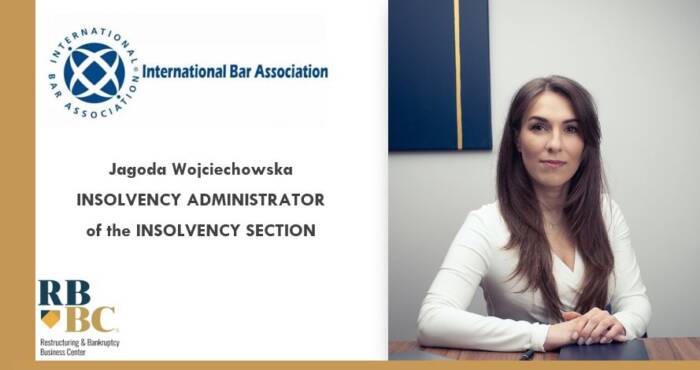
We are pleased to announce that Jagoda Wojciechowska, President of the Management Board, has been appointed Insolvency Administrator of the Insolvency Section of the International Bar Association (IBA), the largest international association of lawyers.
1 min.
20 April 2021

Reporting of tax schemes by 30 June 2020 at the latest?
On 1 January 2019, an amendment to the Tax Ordinance came into force. Taxpayers were imposed with a number of new obligations. First of all, a chapter on the submission of information on tax schemes was introduced.
1 min.
15 May 2020



State aid for rescuing insolvent or potentially insolvent companies
This article will discuss one of the short-term types of public aid resulting from the Act of 16 July 2020 on granting public aid for the rescue or restructuring of entrepreneurs (Journal of Laws of 2020, item 1298), [hereinafter referred to as the Act], i.e. rescue aid.
8 min.
22 October 2022



What documents are required when filing for consumer bankruptcy?
Declaring consumer bankruptcy is one of the most common forms of legal debt relief in situations of permanent insolvency of a natural person. This procedure has been designed for debtors who do not run a business and are unable to settle their liabilities on time.
6 min.
10 April 2025


The impact of the Covid-19 pandemic on changes in transfer pricing tax documentation obligations
Entities required to prepare transfer pricing documentation, both under the Personal Income Tax Act and the Corporate Income Tax Act, are required to submit transfer pricing information to the Head of the National Revenue Administration for the previous tax year.
3 min.
25 April 2020



How to get out of debt without declaring personal bankruptcy?
Debt is a problem that can happen to anyone – both due to unexpected financial difficulties and less well-considered decisions.
6 min.
27 October 2024



Panel on insolvency at the largest conference of the International Bar Association (IBA)
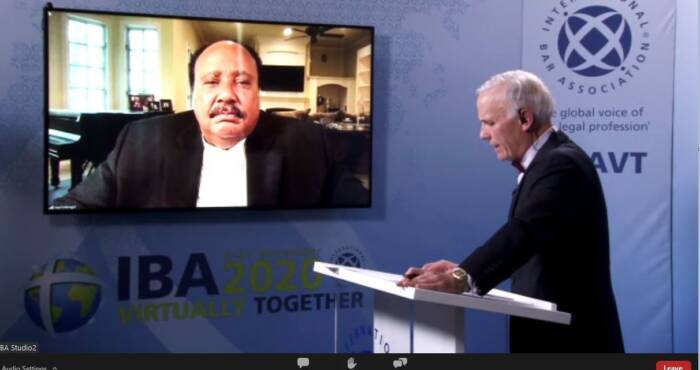
From 2 to 27 November, the annual conference of the largest international bar association, IBA 2020 VIRTUALLY TOGETHER, is taking place.
1 min.
07 November 2020

Application for the Establishment of a Repayment Plan for Creditors and an Application for the Remission / Conditional Remission of Liabilities without Establishing a Repayment Plan for Creditors
This blog article answers frequently asked questions from clients: what an application for the establishment of a repayment plan for creditors is and when it should be submitted.
4 min.
12 March 2026


